Every workflow, fully wired
Screenshots of all workflows, showing every step, branch, and error path in the canvas.
Link Collector: Every Career Site, One Click
n8n · Menu-triggered · The last manual step, automated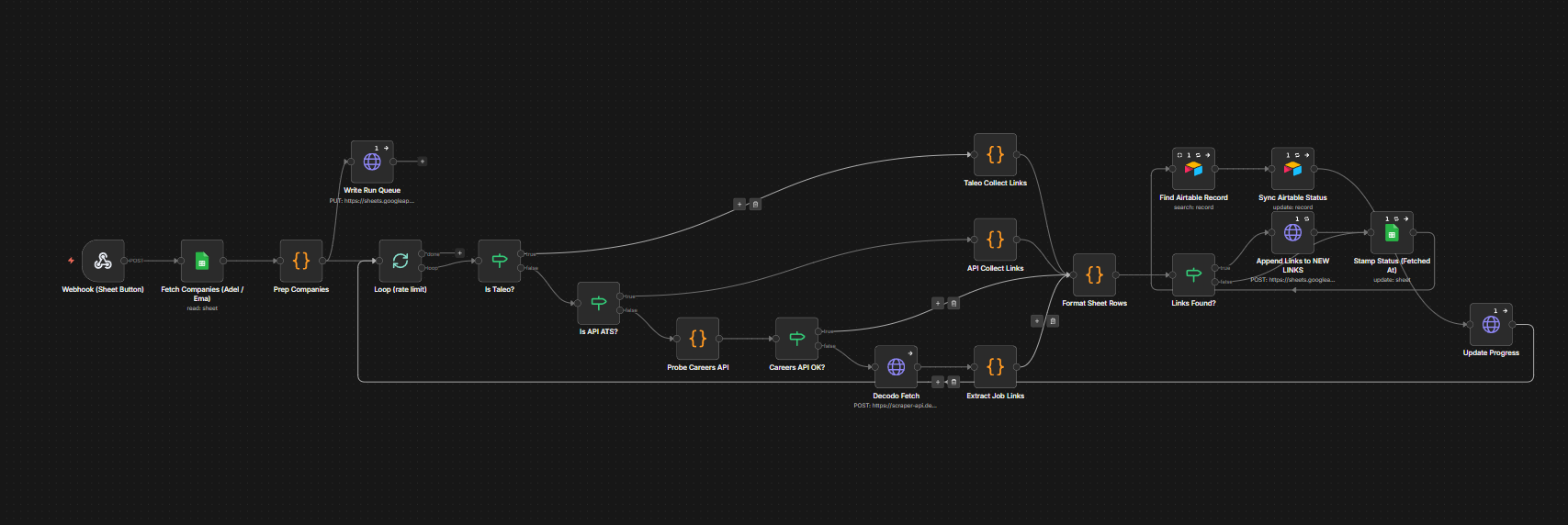
One Click, Every Site
From the sheet menu, it walks all 300+ career sites and collects every job link in one run, even pages listing 999+ openings.
A Strategy per Platform
The 300+ sites run on about 40 hiring platforms, each fetched its own way. Sites the team used to reach with a VPN now go through a paid scraping service instead.
Filter, Append, and Stamp
Only allowed-state jobs are kept, new links land in the sheet, and each company's visit date is stamped automatically.
Initial Filter: Google Sheet Automation Menu
Apps Script · Menu-triggered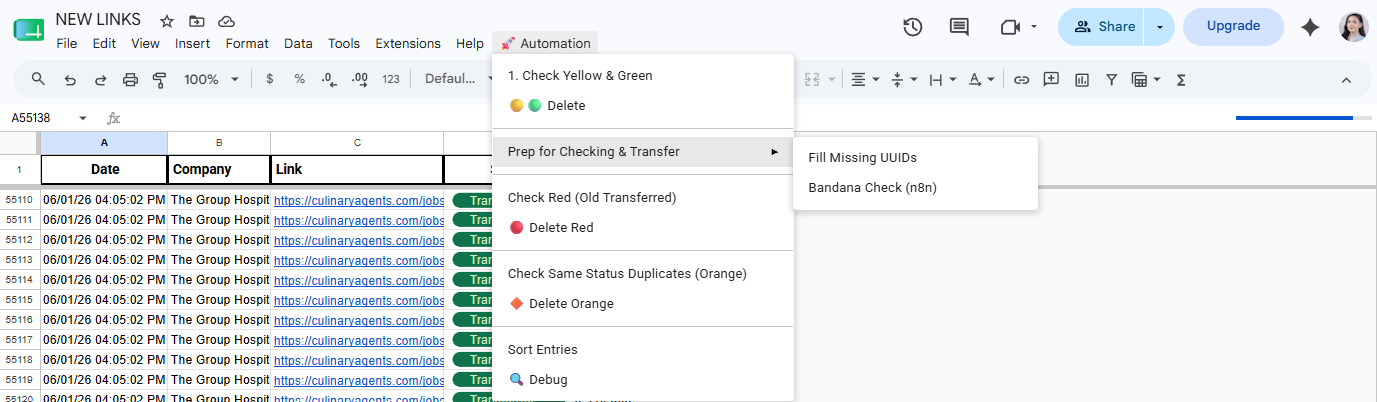
Four-Colour Duplicate Flagging
Four colours mark four kinds of repeat, from already-processed links to same-day resubmissions, so every row's state is visible at a glance.
Tracking ID Assignment
Every new row gets a permanent tracking number the rest of the system uses to follow it.
Send to Automation and Sort
One click sends all pending links to the next step and re-sorts the sheet, oldest first.
Main Filter: Already-Seen Check and Queue Push
Triggered automatically · Already-seen check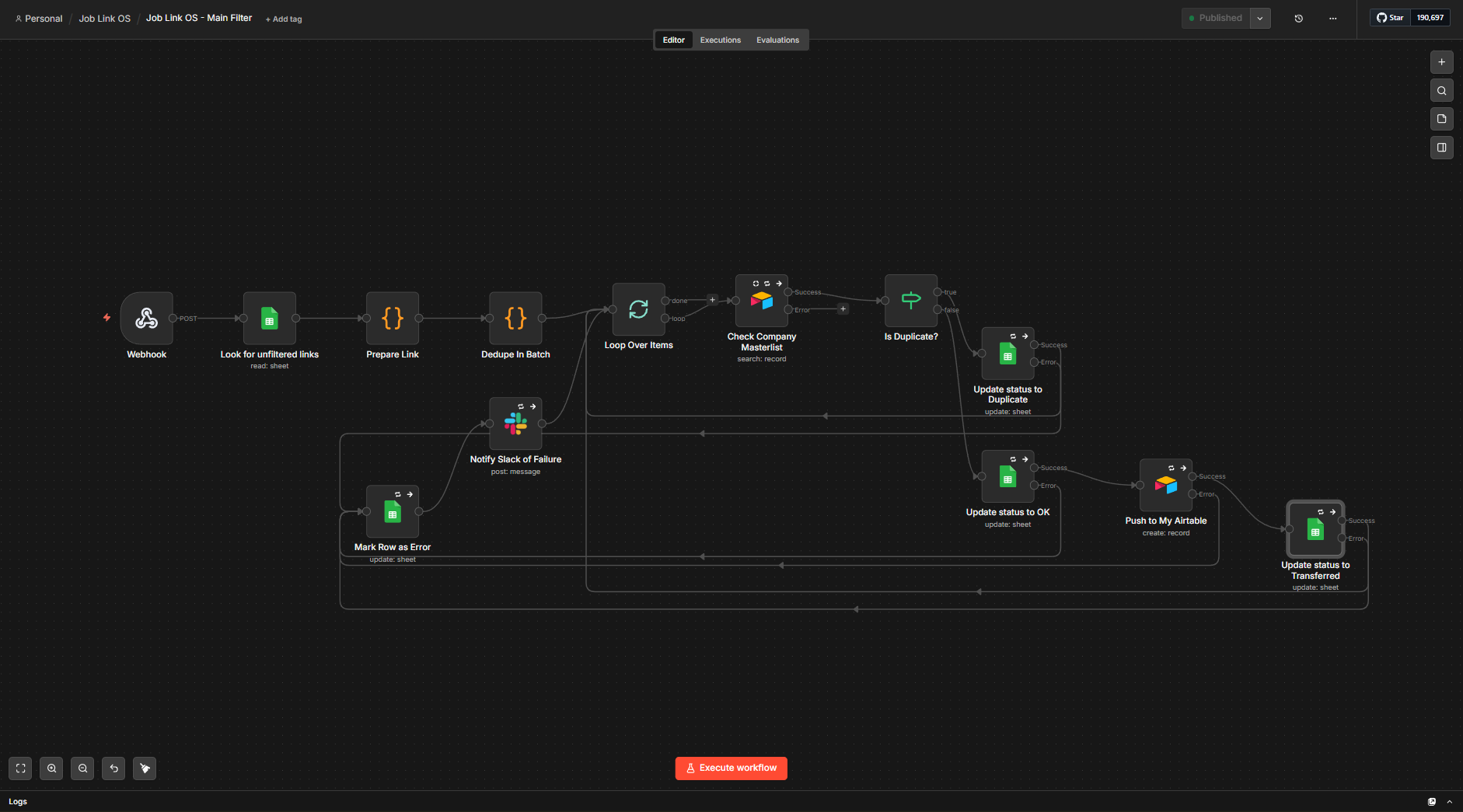
Read and Clean Up
Reads the submitted links, strips tracking junk from each URL, and de-duplicates the batch.
Already-Seen Check
Each link is checked against the full job database. If it was submitted before, the sheet row is updated to show that. If it is new, it moves forward.
Push and Confirm
New links join the processing queue and the row is marked Transferred. Any error marks the row and pings Slack.
Data Scraper: Open, Read, and Save
Runs on a schedule · AI extraction to Airtable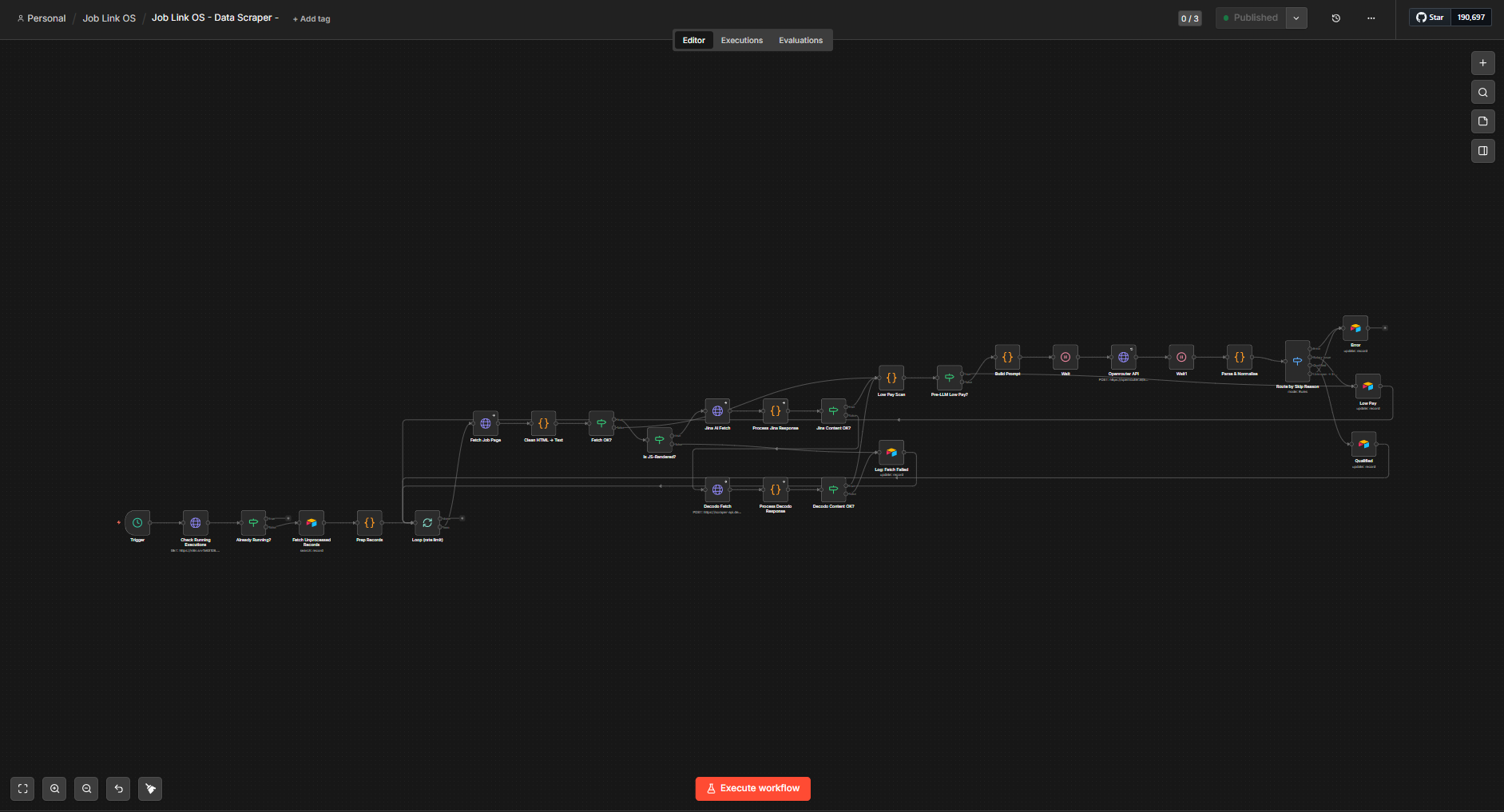
No Double-Runs and Link Cleanup
Checks that no previous run is still going, then rewrites platform links into a directly fetchable format.
Three-Way Page Loading
A standard request first, a rendering tool if the page needs JavaScript, and a paid tool only as a last resort.
Salary Pre-check and AI Reading
Obviously low-pay postings are skipped at no cost. Everything else is read by AI, field by field.
Output Check
Extracted salaries are sanity-checked. Records below the pay threshold are marked skipped, not qualified.
Save to Airtable
Each record saves as Qualified, Salary Issue, or Error. Incomplete addresses are flagged for the Find Address workflow.
Slack Notifications
Every skipped record sends a Slack message with the reason. Qualified records save silently.
Find Address: Completing Partial Addresses
Runs on a schedule · Reference database lookup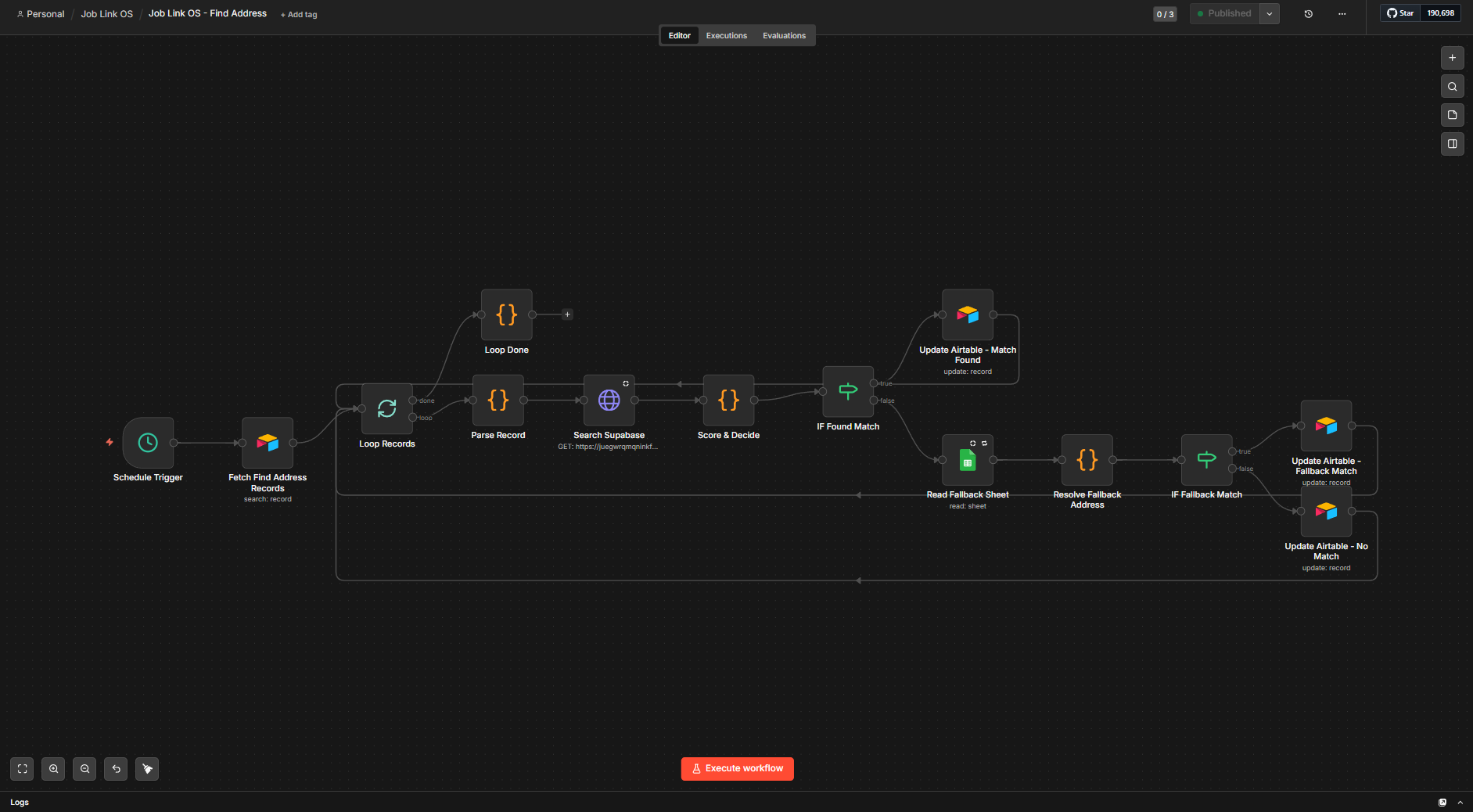
Pick Up Incomplete Records
Finds all records in Airtable that the scraper flagged as having an incomplete address and processes them one by one.
Search the Reference Database
Breaks the partial address into pieces and searches the 95,000-row database for companies that match by name, returning the top candidates to score.
Best-Match Scoring with Fallback
Candidates are ranked by closeness of match, with a backup lookup if nothing hits. Worst case, the original partial address is kept.
Sync Database: Keep the Address Reference Up to Date
Run manually as needed · 95,000 rows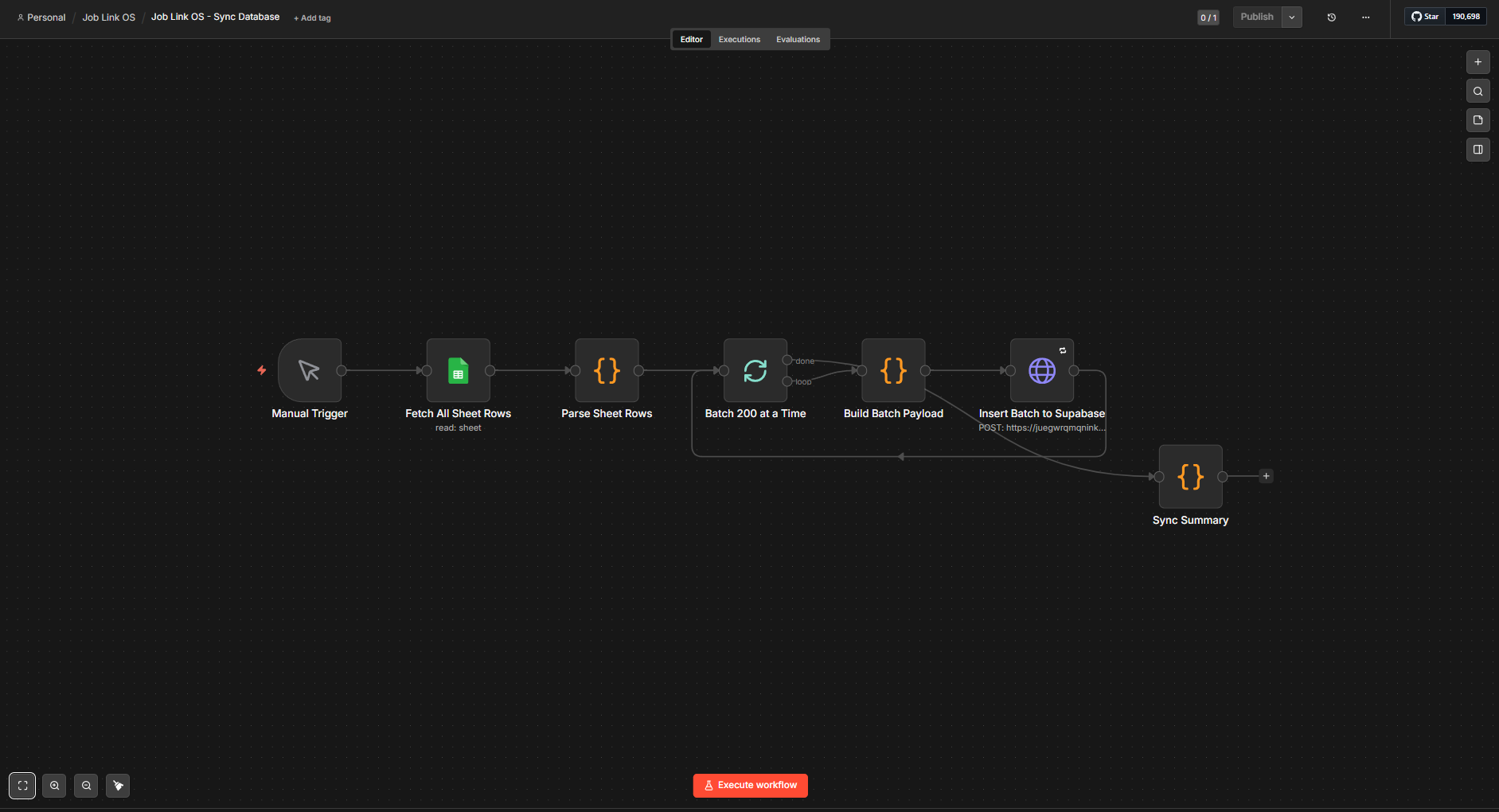
Read the Address Sheet
Reads the master address sheet and prepares every row for upload.
Upload to the Reference Database
Uploads in batches. Existing rows are skipped, so re-running never creates duplicates.
Sync Summary
Reports how many rows were added and how many skipped. Run it whenever the masterlist changes.
Companies Sync: Keep the Companies List and Database in Step
n8n · Supporting workflow · New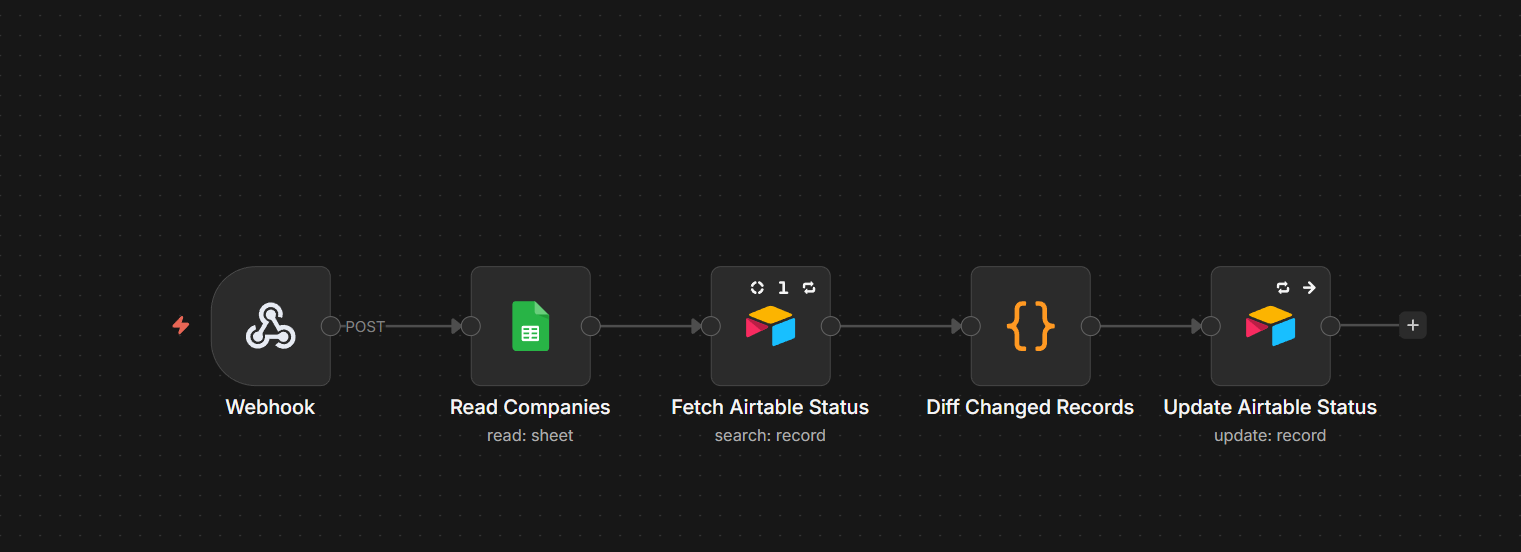
Read Both Sides
Reads the companies list in the sheet and fetches the matching records from the shared database, so the two can be compared in one pass.
Update Only What Changed
Compares the two and updates only the records that actually changed, keeping the sync fast and avoiding unnecessary writes.
Fresh Dates for the Team
A small companion to the Link Collector: the client's team always sees fresh last-updated dates for every company, with no manual logging.