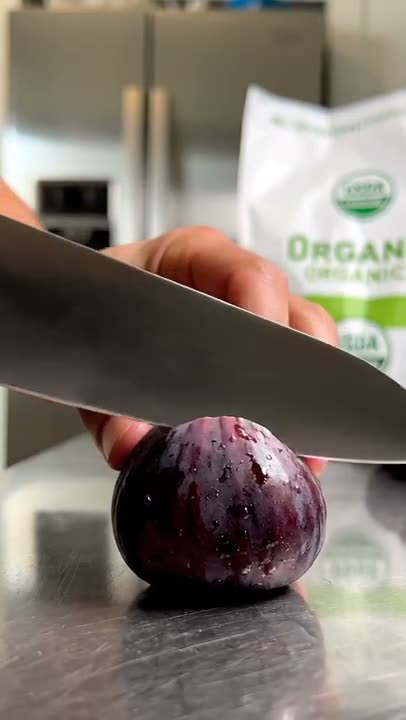
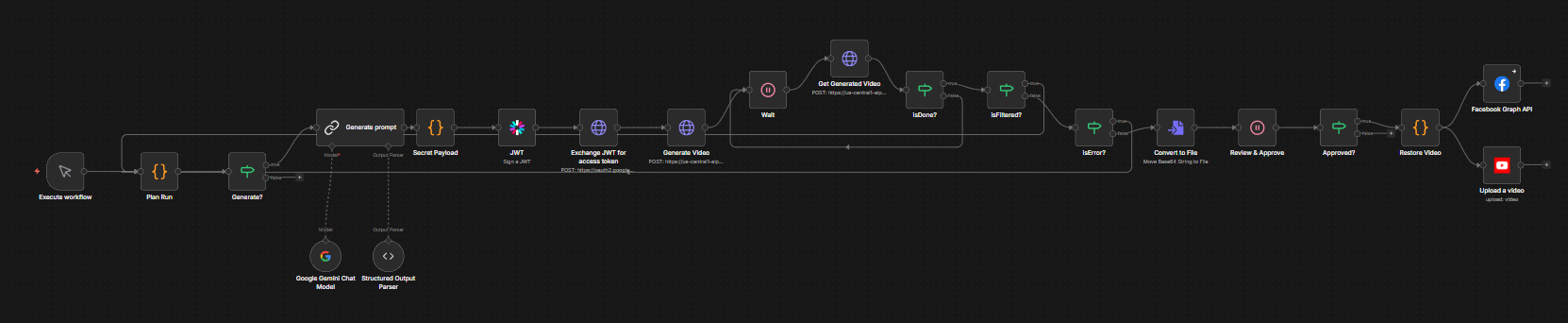
One n8n workflow picks the idea, writes the prompt, makes an eight-second video with sound, waits for me to approve it, then posts to YouTube and Facebook. I pointed it at two brand new accounts to see if anyone would watch.
Play these below
Real output. Prompt, video, title, description
and upload all written by the pipeline.
Short video only works if you post every day. Thinking up a fresh idea every day is the part people quit.
Pick an idea, write the prompt, generate, watch it, bin most of them, write the title and description, then upload to each platform separately.
A pipeline that does all the mechanical work and leaves a person one job: watch the clip, say yes or no.
The video model is the easy part. Everything around it is what makes it safe to leave running.
Names and layout come straight from the real workflow. Green is a decision, amber is where it stops and waits.
Scroll the canvas sideways to follow the run end to end
New YouTube channel, new Facebook page, zero followers. I let the workflow publish. This is what it made.
As reported by YouTube and Facebook on 28 August 2026, five days after the first upload. Both accounts started from zero and the counts are still climbing.
Tap any phone to play it with sound.
I build automation that takes repetitive production work off a team without handing away the final say. Open to client work and full-time roles.
This build is generative by design. A language model writes each prompt and a video model produces every frame, so the clips are synthetic and are published as entertainment, not as footage of real events. No clip reaches either platform without a person watching it first and choosing Publish.
AI tools helped build the workflow itself. The architecture, the guard rails and the testing are mine.